
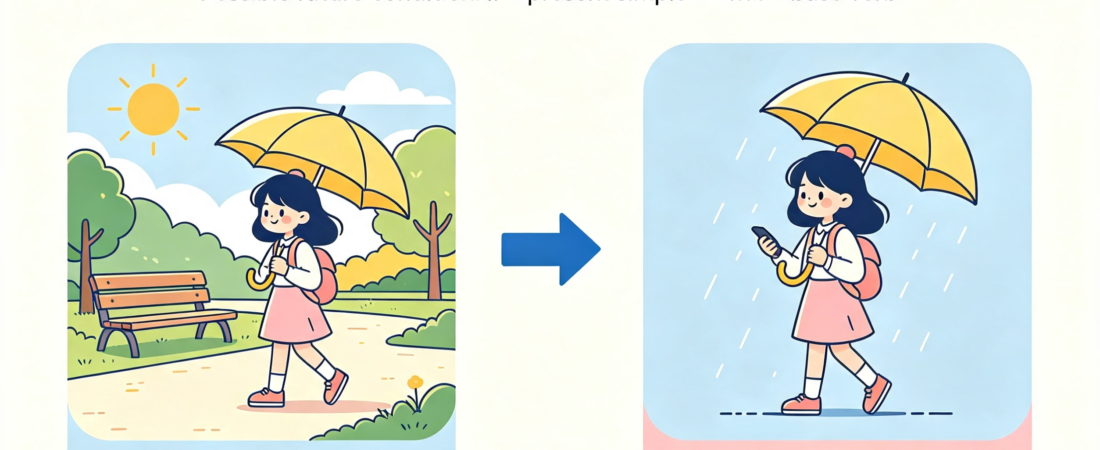
É usado quando falamos de situações possíveis ou prováveis no futuro. A estrutura é simples:
👉 If + presente simples, will + verbo no infinitivo.
- If significa “se”.
- A primeira parte da frase (com if) mostra a condição.
- A segunda parte (com will) mostra o resultado provável.
💡 Pense assim: Se algo acontecer, então outra coisa vai acontecer.
Exemplo básico:
- If it rains, I will stay home. (Se chover, eu vou ficar em casa.)
20 exemplos práticos
- If it rains, I will take an umbrella.
- If I study, I will pass the exam.
- If you call me, I will answer.
- If she cooks, we will eat together.
- If they play soccer, they will have fun.
- If we leave now, we will catch the bus.
- If you don’t hurry, you will be late.
- If he studies English, he will improve.
- If I drink coffee, I will stay awake.
- If the sun shines, we will go to the beach.
- If you help me, I will finish faster.
- If she buys a ticket, she will travel tomorrow.
- If they study hard, they will succeed.
- If I eat too much, I will feel sick.
- If you open the window, the room will be fresh.
- If he runs fast, he will win the race.
- If we visit London, we will see Big Ben.
- If she studies medicine, she will be a doctor.
- If I save money, I will buy a new phone.
- If you practice every day, you will get better.